Safety on the London Underground combines staff support, surveillance and passengers’ own precautions. For a visitor, the most useful things are knowing how to protect belongings, whom to tell and what to do if a problem arises.
Accidents, crime and health incidents are different matters: a figure about one does not describe every risk of a journey. An accident rate does not, for example, indicate the likelihood of pickpocketing.
Safety Measures on the London Underground
Transport for London (TfL) works with station staff and police forces to prevent and respond to incidents. Its measures include:
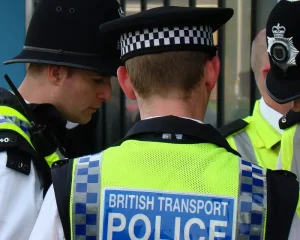
- Surveillance and police presence: British Transport Police (BTP) is the specialist railway police force, including the Underground. Ask staff or an officer for help when needed; do not assume there is a patrol at every station.
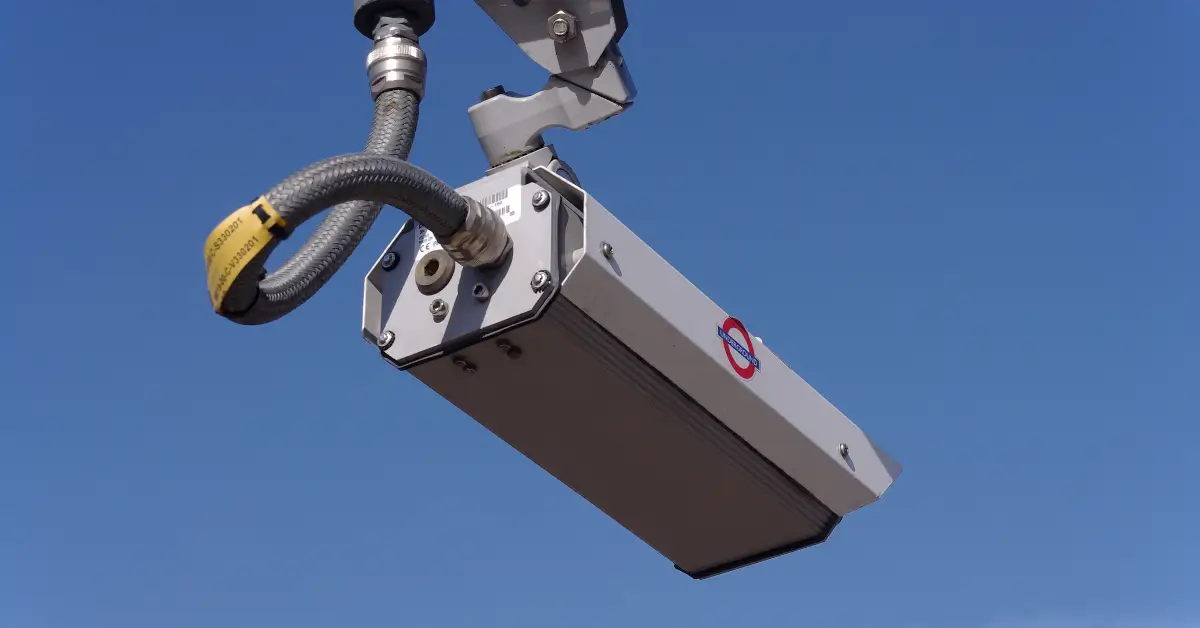
- CCTV: cameras are part of the safety measures. They do not provide automatic intervention or guarantee someone is watching every image live. If something happens, report it and identify the location.
- Access control: many stations have gates and readers to validate tickets, Oyster or contactless. Gates are not always closed; you must still pay and validate. Train doors are not a system for checking each passenger’s ticket.
- Police cooperation: TfL works with BTP and other forces, including the Metropolitan Police, depending on the location and incident. For railway crime that does not require an emergency response, use the BTP channels below.
- Staff and assistance: follow staff instructions and use station help points when you need assistance. In an emergency, do not wait to find a customer service office.
Artificial Intelligence and Safety on the Underground
TfL has documented a pilot at Willesden Green using AI algorithms and motion detection with existing cameras. A trial at one station does not show that the same system operates across the network or that it detects every crime.
- Computer vision: these trials analyse images to identify defined events and generate alerts. TfL described fare-evasion detection and distinguished this from facial recognition.
- Emotion detection: do not assume cameras analyse passengers’ emotional state. A computer-vision pilot does not establish that function or its general deployment.
- Privacy: the use of images and algorithms requires scrutiny of purpose, public information and data protection. CCTV should not be confused with facial recognition or emotion analysis.
The reference is TfL’s report presented in December 2023; it describes a pilot, not a guarantee of the technology available today at every station.
Suicide Prevention on the Underground
If you see someone who appears to be in danger near the tracks, alert staff immediately or use a help point. If their life is in immediate danger, call 999 when you can. Do not go onto the tracks or put your own safety at risk.
- Responding to someone at risk: give the station, platform and what you are observing. Follow staff instructions and leave space for emergency teams to intervene. Protecting the person takes priority over reducing service disruption.
Terrorism and Security
The attacks on 7 July 2005 killed 52 passengers across three Underground trains and a bus. That figure covers all the attacks, rather than the Underground alone. Their memory forms part of the history of safety on London’s transport network.
As a traveller, never leave luggage unattended. Report an abandoned object or suspicious situation to staff and do not touch the item. If danger is immediate, seek urgent help; do not approach to investigate or take photographs.
Smoking and Alcohol Rules
Smoking and electronic cigarettes are not allowed. Neither are drinking alcohol or carrying open containers of alcoholic drinks. The alcohol restriction took effect on the Underground on 1 June 2008; it was not a measure introduced after the 1987 fire. It is not a general ban on drinking water.
The fire at King’s Cross St Pancras on 18 November 1987 caused 31 deaths. BTP’s historical account records this figure. Its impact on fire safety should be distinguished from the later alcohol ban.
Fire Risk
The 1987 fire prompted a major review of Underground safety. For passengers today, the practical response to smoke or an alarm is to alert staff and follow their instructions and evacuation signs. Do not return to a dangerous area to collect possessions.
If a train stops in a tunnel, do not open doors or try to leave on your own. Use the emergency alarm or communication device according to its instructions and wait for directions from the driver or staff.
Safety Statistics
When assessing a safety figure, check its date, scope and what it measures: accidents, recorded crimes and incidents are different indicators. Also check whether a rate is expressed per journey, per passenger or per distance travelled.
For passenger and safety figures, use TfL’s official reports and BTP data and publications, always checking the period and network covered.
Whom to Contact: Emergency or Non-emergency Report
- Immediate danger, an ongoing assault or risk to life: call 999. Without phone signal, find staff or a help point. BTP’s text service is not a substitute for an emergency response.
- Railway crime or an incident that does not need an immediate response: send an SMS to 61016 or call 0800 40 50 40. Include what happened, where and when. The 61016 number is an SMS service, not a WhatsApp chat.
- If the text does not send or there is no signal: do not keep waiting if you need help. Speak to staff. For a non-urgent incident, you can also report online to BTP once connected.
BTP explains when to use each channel in its 61016 service guide. For timetables, routes or a fare query, use TfL channels rather than the police.
Useful Precautions During Your Journey
- Phone and wallet: keep control of your belongings, particularly when entering, leaving and passing through busy areas. After a theft, inform BTP and block cards or your phone through your provider’s channels once safe.
- Harassment: you can report unwanted sexual behaviour even without physical contact. If it happens to you or you witness it, seek help without confronting the person. BTP provides specific information about sexual harassment.
- Platforms: wait behind the yellow line, let people off before boarding and never try to retrieve objects from the tracks. Tell staff.
- At night: check the last train and the whole route to your accommodation. The Night Tube does not cover every line or run every day.
Image courtesy of Matt Buck.
Last reviewed: 18 October 2026.
This entry is also available in: