
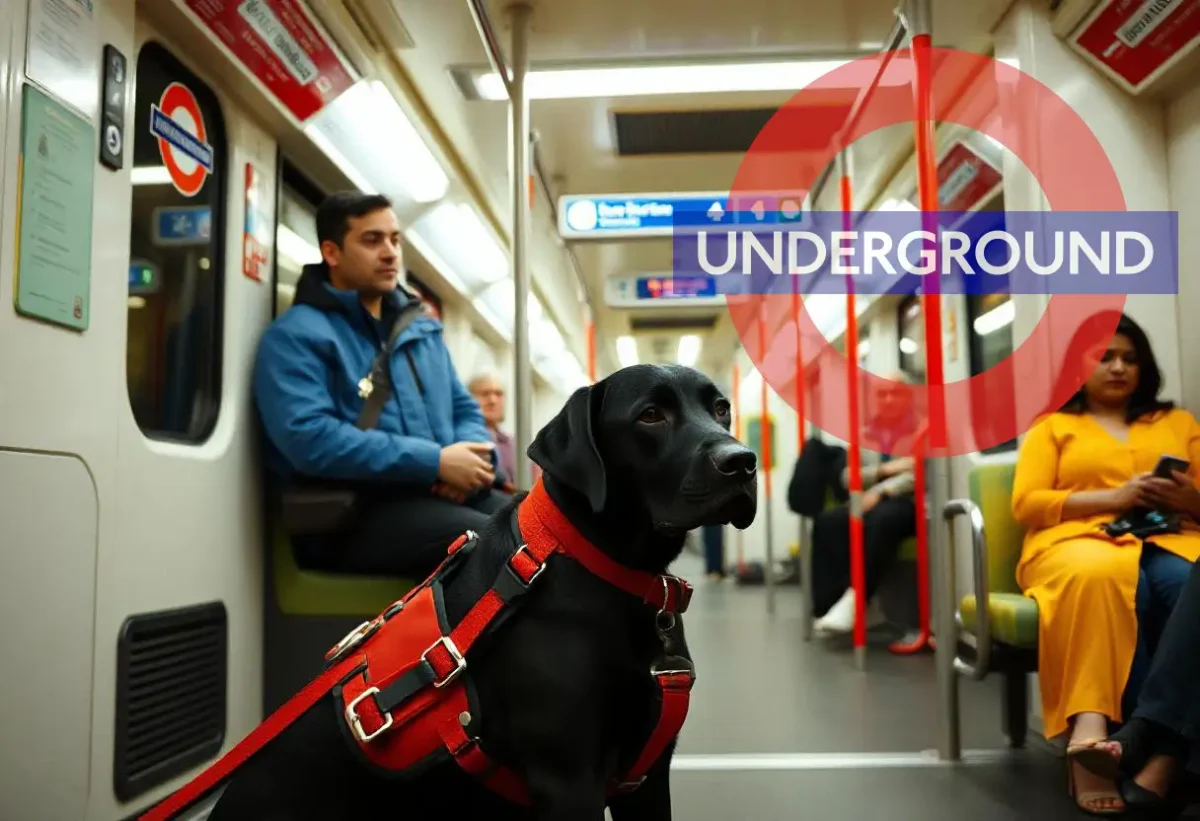
If you are planning to travel around London with your pet, you can use the Underground together.
However, it is important to know the rules and consider other passengers when preparing for the journey.
Here you will find the conditions of entry and how to plan the route, particularly if your dog is too large to carry. An animal being permitted does not guarantee that every entrance is suitable for it.
Basic Rules for Travelling with Pets on the London Underground
The Underground allows pets, subject to rules protecting passengers and animals. The main requirements are:
1. Dogs and Other Domestic Animals
- Dogs can travel without an additional ticket, provided they are kept under control throughout the journey.
- You must keep your animal under control on a lead or in a suitable container; this is not merely a recommendation. It must not occupy a seat. TfL may refuse an animal for a good reason, for example if it appears dangerous or is not properly controlled.
- Assistance dogs are permitted and do not need a ticket for the animal. This does not exempt them from every safety rule: an assistance dog must be specifically trained to walk on a moving escalator.
2. Using Pet Carriers
- For cats and other small animals, prepare a suitable, secure carrier. TfL’s general rule requires control on a lead or in a suitable container; it does not set a separate carrier requirement here for every species. For an animal that might escape into a crowd, an enclosed carrier makes the transfer easier to control.
- The carrier should be sturdy and roomy enough for the animal to remain comfortable during the journey.
3. Escalators
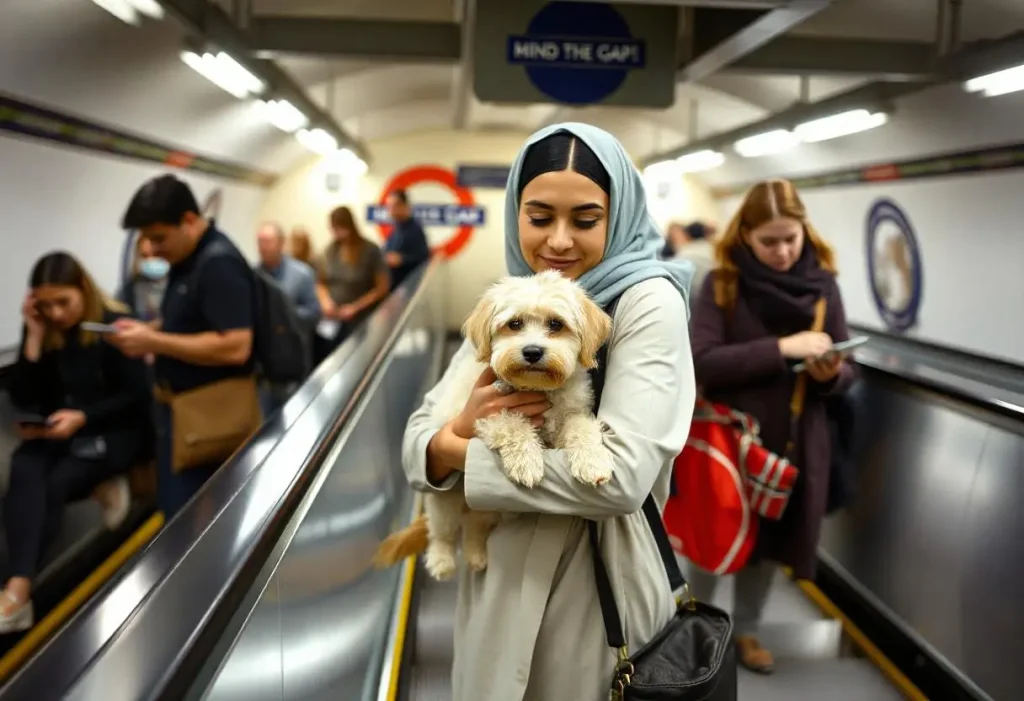
- At stations, you must use a staircase or lift where provided. If neither is available and you need to use a moving escalator, you must carry your animal. The exception is an assistance dog trained to walk on it. Do not let a pet walk onto it on its own.
- Check lifts and interchanges along the whole route. If the animal is too large to carry, speak to staff before approaching the escalator: TfL’s conditions provide for staff stopping it to allow passage when safe, generally outside busy periods. Do not expect it to be stopped immediately or try to stop it yourself.
4. Consideration for Other Passengers
- Owners should ensure their animals do not disturb other Underground users. Keep your pet close and under control throughout the journey.
- Some people have animal phobias or allergies, so be considerate and respectful of fellow passengers.
5. Exotic or Unusual Pets
- TfL’s conditions refer to dogs and other inoffensive animals, not automatic permission for every species. If your pet is exotic or raises safety questions, contact TfL before travelling. Admission to the Underground does not replace rules that may govern owning or transporting that animal.
Useful Tips for Travelling with Pets on the Underground
To make the journey as comfortable as possible for your pet, consider the following:
Plan Your Route
Before leaving, check entry, changes and exit in the official TfL journey planner. Adjust options to avoid escalators if needed and check lift disruption. A lift at your first station is not enough: you also need to complete the interchange and leave at your destination. Our guide to the step-free London Underground explains how to check the entire route.
Avoid the Busiest Periods
Where possible, choose quieter times and let a full train go. Crowding depends on the station, events and day; no time window guarantees a quiet journey. Peak fare periods are not a general ban on pets either. If you need help with a large dog at an escalator, station crowding affects when staff can assist.
London Underground Stations and Lines Where Pets Are Allowed
The general rules are not limited to five lines: you do not need a special pet-friendly line or a reserved carriage. The specific access and interchange matter most. For the lines listed here, apply the same checks:
- Central line: check stairs and lifts at your chosen stations; do not look for a reserved pet area.
- District line: keep the animal controlled and off seats. The general rules apply here too.
- Circle line: check the entrance and exit you will use, particularly with a carrier.
- Hammersmith & City line: check the connection to your next line, not just the departure station.
- Metropolitan line: confirm the whole route and alternatives if a lift is out of service.
Do not mistake wheelchair spaces or priority seats for animal areas. Keep access routes clear and follow staff instructions.
Recommendations for a Calm Journey
These additional tips can help you prepare:
- Organise your route: avoid crowded places and choose quieter travel times to reduce stress for your pet.
- Choose somewhere you will not obstruct others: keep your animal or carrier close, off seats and clear of doors and aisles. There is no need to find a reserved pet space.
- Help your pet stay calm: bring familiar toys, treats or another object that helps it feel settled and secure.
- Respect other people: keep your pet controlled and be aware of other passengers’ space.
To Sum Up
You can use the Underground with an admitted pet if you follow the conditions and the route is suitable. For a large dog, work out how to manage stairs beforehand; for a small animal, prepare secure transport. If the planned access changes or your pet cannot cope with the journey, consult staff and consider another route.
Before Going Through the Gates
- Have your payment method ready and use the wide gate or carry your animal through the gates, following TfL’s guidance.
- If you have an assistance dog and there is no wide gate, ask staff to open access.
- Do not hand your pet to staff to look after: TfL’s conditions do not allow them to take charge of an animal.
Practical example: if you cannot lift your dog and an interchange only offers a moving escalator, ask staff beforehand. A slightly longer route with a lift may be more suitable than arriving at an entrance and discovering you cannot continue.
This guidance concerns local TfL transport. If your journey includes entering the UK, a flight, Eurostar or another rail operator, check their conditions separately.
Source: TfL’s official Conditions of Carriage, effective from 24 September 2026, sections 9.15–9.17. Checked on 19 October 2026. For access planning, see the official accessible journey planning guide.
Last reviewed: 19 October 2026.
This entry is also available in: