
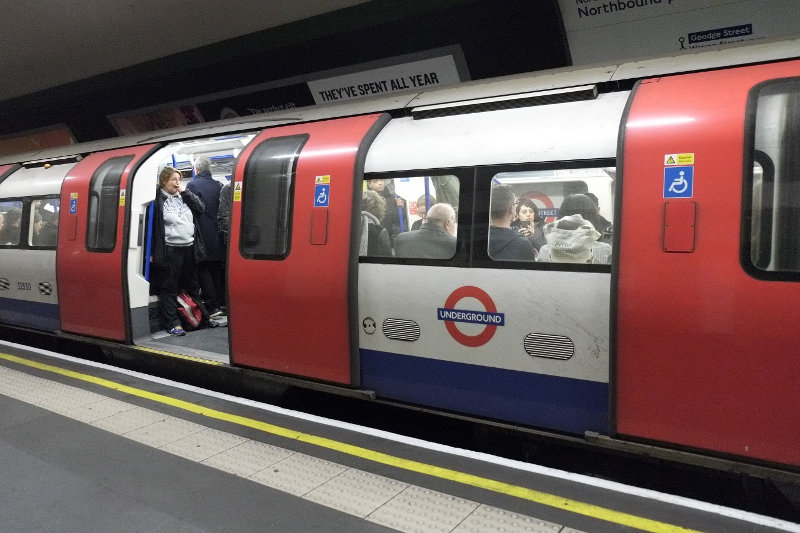
You can use the London Underground to reach many of the city’s best-known sights.
This guide covers the most useful stations for sightseeing and the attractions you can reach from each one. The walk from the station varies with your destination.
If the map looks confusing at first, start with the line you need and the station nearest your destination. You do not need to memorise the whole network.
Below you will find the main stops for historic buildings, parks, museums, markets and shopping streets. Use the network map alongside the guide to plan your journeys and decide where to change trains.
How many lines and stations does the London Underground have?
The London Underground opened in 1863 and is the world’s oldest underground railway. It has 11 lines and 272 stations. Other services shown on the map, including the Elizabeth line, DLR and London Overground, are separate from those 11 Underground lines.
The map also shows fare zones, with zones 1 and 2 covering central areas and higher numbers extending outwards. Zone 9 is the outermost numbered London fare zone shown on the Tube map; some rail destinations lie beyond the numbered zones.
Your fare depends on the zones, journey, time and payment method. Counting stops or measuring distance is not enough. Check which zones your journey covers before choosing a pass or adding travel credit.
Which stations are useful for London’s main attractions?
The stations themselves are part of a visit to London: look at their signs, platforms and architecture while keeping passageways clear.
Many of the best-known sights are in zones 1 and 2. The following stops cover a selection of them, with alternatives where a different line or park entrance may save you a change.
Westminster station for historic London
The Palace of Westminster, Buckingham Palace, Westminster Abbey and Westminster Cathedral are all in this part of London, but they are not all beside the same station.
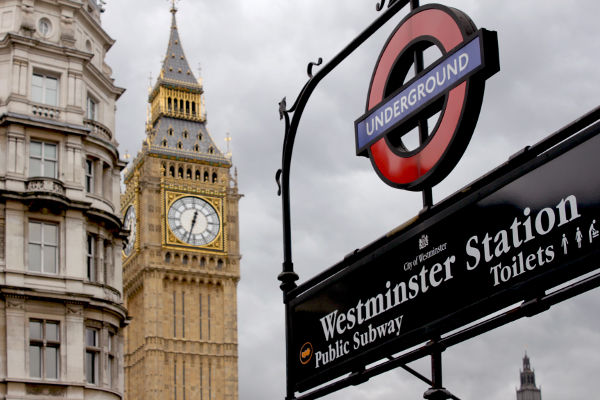
Big Ben is the name of the great bell in the Elizabeth Tower, although it is often used to refer to the tower and clock together. The tower stands at the north-eastern end of the Palace of Westminster, home to Parliament.
For Big Ben and Westminster Bridge, use Westminster station. It is served by Jubilee (grey), District (green) and Circle (yellow).
You emerge beside Parliament and close to Westminster Abbey. For Buckingham Palace, consider Green Park, Victoria or St James’s Park according to your route. Victoria is more convenient for Westminster Cathedral. The abbey and cathedral are different buildings.
Another option is to get off at Embankment and walk along the Thames towards Big Ben, with views of the London Eye across the river. Allow roughly 15 minutes, depending on your pace and stops.
Hyde Park Corner station for the park
There is no station called “Hyde Park”. Hyde Park Corner, on the Piccadilly line, serves the park’s south-eastern corner. Hyde Park covers more than 140 hectares and adjoins Kensington Gardens.
You can walk, sit on the grass or spend time by the Serpentine. Use permitted routes for cycling and skating; boat hire depends on the season and operating hours.
Choose your entrance before choosing your station: Marble Arch (Central) is useful for Speakers’ Corner, while Lancaster Gate (Central) serves the northern side near Kensington Gardens.
Speakers’ Corner is particularly associated with Sunday speeches and debates. Public speaking there remains subject to the law.
Waterloo station for the London Eye
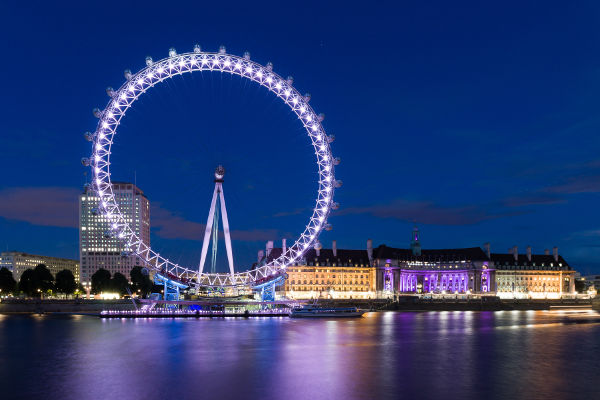
For views over the Thames and towards Big Ben from the London Eye, Waterloo is a useful stop. It is served by Northern (black), Jubilee (grey), Bakerloo (brown) and Waterloo & City (turquoise).
The London Eye is also known as the Millennium Wheel. Book ahead and choose a time slot that fits your itinerary; booking does not necessarily remove admission queues. The attraction puts the walk from Waterloo at around five minutes.
Westminster is another option if you would prefer to cross Westminster Bridge on foot and enjoy the views along the way.
Tower Hill station for Tower Bridge
Tower Bridge is the lifting bridge over the Thames beside the Tower of London. It is not London Bridge, which is a different bridge farther west.
Tower Hill is served by Circle (yellow) and District (green). It is useful for visiting the Tower of London and continuing on foot to Tower Bridge.
If you enjoy walking, you can continue along the river towards Big Ben and visit other historic places en route. This is a long riverside walk rather than a shortcut, so allow time for both the distance and any sightseeing stops.
Charing Cross station for Trafalgar Square
Trafalgar Square commemorates Britain’s naval victory over the French and Spanish fleets at the Battle of Trafalgar in 1805.
Charing Cross is served by Northern (black) and Bakerloo (brown).
From the square, the walk to Big Ben takes roughly 15 minutes without extended stops. Follow Whitehall to see the gated entrance to Downing Street, where the prime minister’s residence is located. Downing Street is not open for visitors to walk along freely.
Piccadilly Circus station for shopping
Piccadilly Circus is a useful starting point for shopping and entertainment. The station is served by Piccadilly (dark blue) and Bakerloo (brown).
From here you can walk to the Covent Garden neighbourhood and market, Leicester Square and the M&M’s shop. Covent Garden is a neighbourhood and market, rather than a shopping centre.
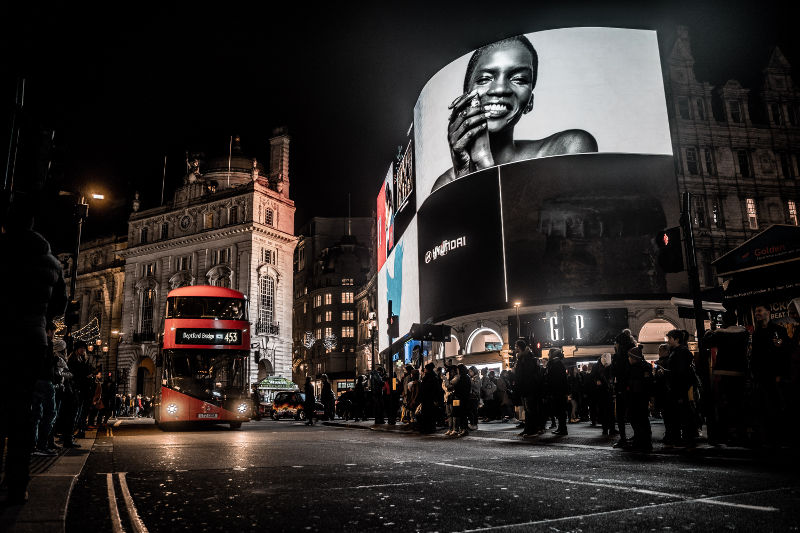
Regent Street and Oxford Street offer more shopping nearby. Choose the streets you want to visit first so that your walk does not double back unnecessarily.
Camden Town station for the market
For souvenirs, market stalls and food, use Camden Town on the Northern line (black).
From the station you can walk towards Camden Market, exploring the surrounding streets along the way. Check the destination and branch of your Northern line train before boarding.
Notting Hill Gate station for Portobello Market
Notting Hill Gate is a useful starting point for Portobello Road and its antiques and collectables.
Check the market days before setting out: the stalls and sections trading vary with the day. A weekday visit is not the same as a Saturday visit.
The station is served by Central (red), District (green) and Circle (yellow).
South Kensington station for the Natural History Museum
The Natural History Museum is a useful family outing, with galleries featuring dinosaurs and large mammals. South Kensington is served by Piccadilly (dark blue), Circle (yellow) and District (green).
The former outdoor ice rink had its final season in 2021–2022. You can now include the museum’s free gardens in your visit; check their opening hours before going.
Russell Square station for the British Museum
Russell Square on Piccadilly (dark blue) is one option for the British Museum. You can also walk from Holborn (Central and Piccadilly) or Tottenham Court Road (Central, Northern and Elizabeth line).
Choose according to the line you are already using: avoiding an unnecessary change can be more useful than aiming for one particular station.
Inside the museum, consider the Egyptian mummies, the Nereid Monument, the Rosetta Stone, the double-headed serpent and the moai from Easter Island. Check whether the relevant galleries and objects are available on your visit date.
London Underground stations by attraction
Use this table to compare stations and lines. The best stop for your journey may depend on where you are coming from and which entrance you want to use.
| Destination | Station | Lines and colours |
|---|---|---|
| Big Ben and Westminster Abbey | Westminster | District (green), Circle (yellow), Jubilee (grey) |
| Hyde Park, south-eastern entrance | Hyde Park Corner | Piccadilly (dark blue) |
| Buckingham Palace | Green Park / Victoria / St James’s Park | Green Park: Jubilee, Piccadilly and Victoria; Victoria: Victoria, District and Circle; St James’s Park: District and Circle |
| London Eye | Waterloo | Bakerloo (brown), Northern (black), Jubilee (grey), Waterloo & City (turquoise) |
| Tower Bridge and Tower of London | Tower Hill | Circle (yellow), District (green) |
| London Bridge: a different bridge from Tower Bridge | London Bridge | Northern (black), Jubilee (grey) |
| Trafalgar Square | Charing Cross | Bakerloo (brown), Northern (black) |
| Piccadilly Circus | Piccadilly Circus | Bakerloo (brown), Piccadilly (dark blue) |
| Camden Market | Camden Town | Northern (black) |
| Portobello Market | Notting Hill Gate | Central (red), District (green), Circle (yellow) |
| Natural History Museum | South Kensington | Piccadilly (dark blue), Circle (yellow), District (green) |
| British Museum | Russell Square | Piccadilly (dark blue) |
Find the main stations on the London Underground map
The map below was marked to help identify the main stops in this guide. Several lines can meet at the same station while following different routes elsewhere, so your journey may require a change.
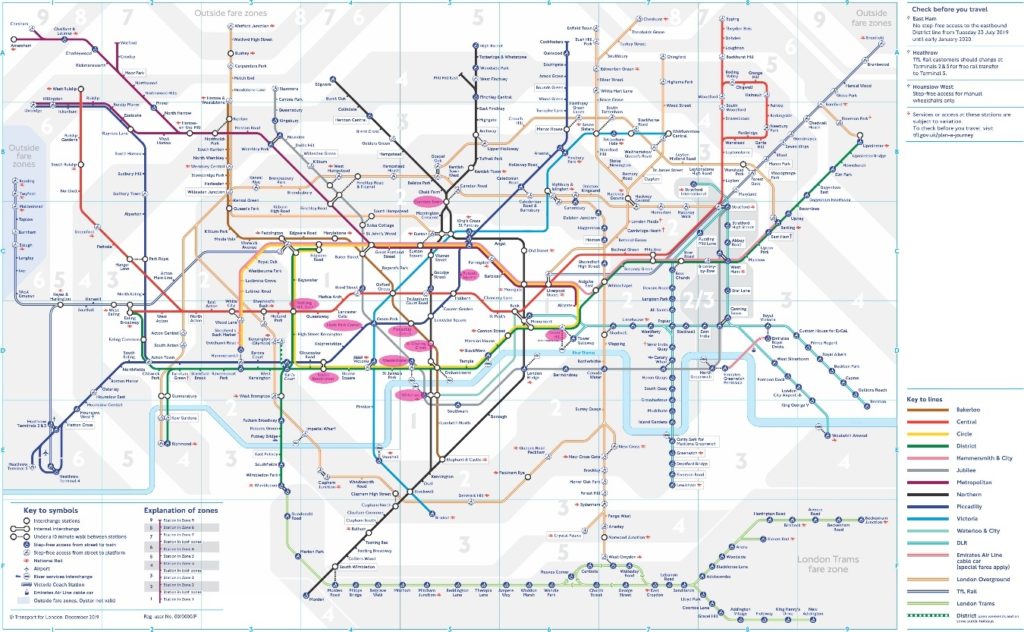
This is an old map, retained for reference; it does not show all subsequent changes. For planning your journey, use the current TfL map and check service updates for your travel date.
Apps to help you travel around London
Keep a map on your phone and plan the route before leaving. Mobile coverage underground is expanding, but availability depends on the section of the network and your operator. Save a screenshot of your itinerary in case you lose your connection.
- TfL Go: TfL’s official app for maps, journey planning and service information. You can also manage Oyster and contactless functions through your account.
- Citymapper: compares journeys using different modes, including public transport, walking and cycling. It is available for iOS and Android.
- Google Maps: downloaded maps can be viewed offline, but offline public transport and walking directions are unavailable. Save your planned journey separately while you have a connection. Download the app for iOS or Android if needed.
Operating hours and tickets for the London Underground
First and last trains depend on the line, station and day. Check TfL’s first and last train information for your journey. Selected lines have Night Tube services on Friday and Saturday nights; this does not cover the entire network.
For Tube and rail fares, the general peak periods are 06:30–09:30 and 16:00–19:00, Monday to Friday excluding public holidays, with exceptions depending on the journey. Crowding also varies by station and events.
Oyster lets you travel using pay as you go credit. A compatible contactless bank card or device can also be used for adult journeys. Always touch in and out with the same card or device.
A Travelcard covers a defined period and set of zones, rather than a fixed number of journeys. It allows unlimited travel on covered services during its validity, including the Tube and DLR in the relevant zones, as well as TfL buses.
London Pass can bring together admission to included attractions you want to visit. Compare the options with your itinerary and check which attractions require reservations. Arrange transport between visits with Oyster, contactless or a Travelcard according to your plans.
Practical tips for travelling on the London Underground
- Stand on the right on escalators and leave the left clear. In corridors, follow the station’s directional signs.
- Use signs such as northbound, southbound, eastbound and westbound, then check that your destination is on that route.
- Look at platform displays for destinations and expected arrivals.
- Stay behind the yellow line on the platform.
- Some lines have branches. Trains sharing a section of track do not necessarily serve all the same stations.
- Check the line name, direction and train destination. A map colour does not tell you which branch the train will take.
- Stand beside the doors and let passengers off before boarding.
- Use the diagrams, announcements and available displays to follow your journey. Ask staff if you need help.
Checklist before travelling to London
- Check reliable options for exchanging your currency into pounds if you need cash.
- Plan the route from your arrival airport to your accommodation.
- Download a city map and keep a copy of your transport itinerary.
- Compare Oyster, contactless and Travelcard for your zones and travel days. Check any discounts available for your age or for children travelling with you.
- Include free attractions and compare any available offers for restaurants and guided visits.
- Check market days and opening times before planning a shopping visit.
- Book the tours you want in advance with reliable operators.
- Compare accommodation prices and locations, including the journey from the nearest station.
Once your travel dates are set, pack for the weather: a warm layer and an umbrella can be useful in London.
Last reviewed: 21 October 2026.
This entry is also available in: